

The Sun’s eye had a sickly glare,
The Earth with age was wan,
The skeletons of nations were
Around that lonely man!
— Thomas Campbell, “The Last Man”
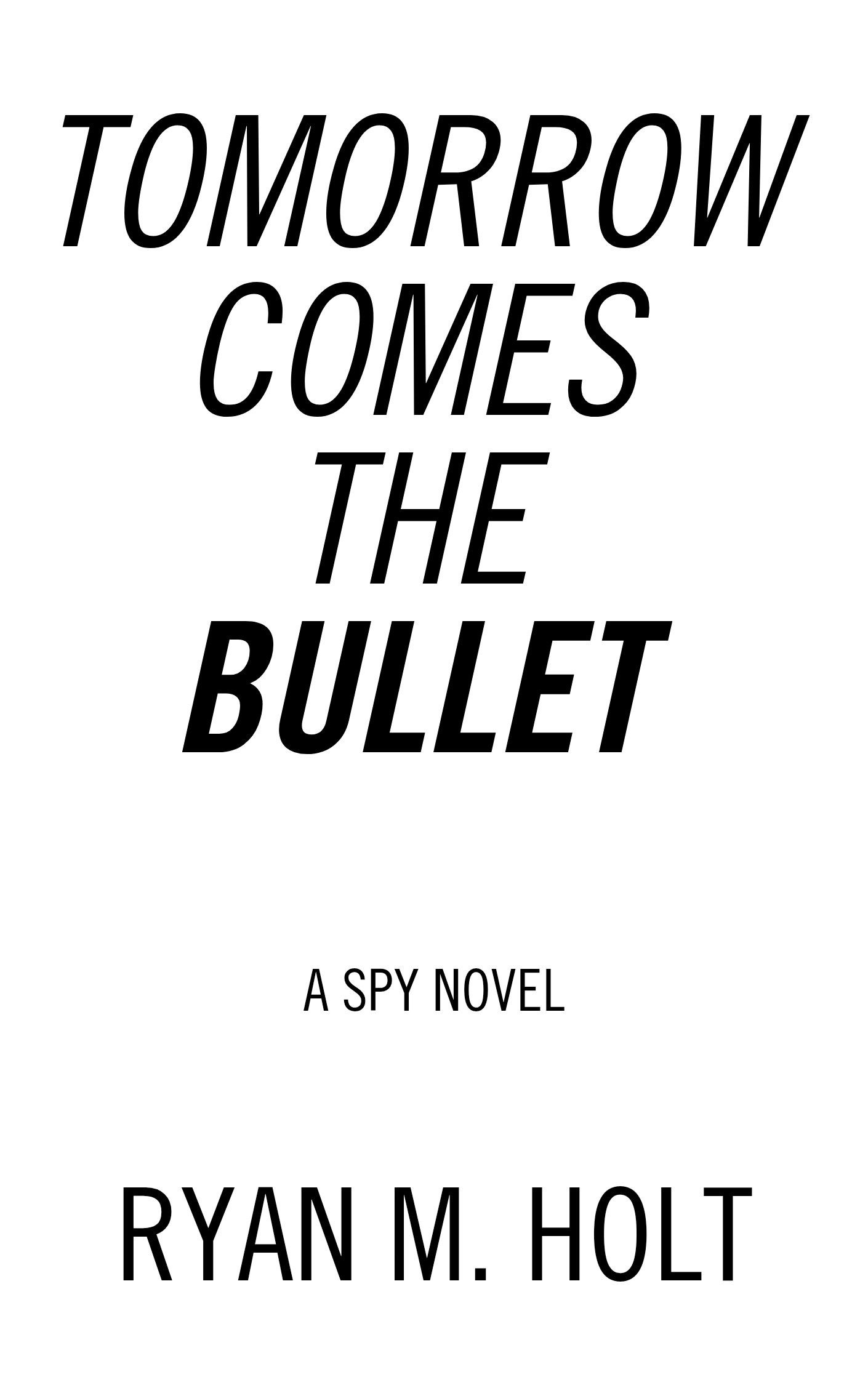
Meet Silas Thorn, codename: Vagabond.
He is a precision instrument wielded by the Obscurati, a stateless entity operating in the margins of the geopolitical order. He has been sent to hunt a shadow network of posthuman cultists determined to engineer the next stage of human evolution.
The pursuit plunges Thorn deep into a modern underworld where the analog and digital violently collide. Decoding a conspiracy built on art forgery, data brokers, billionaires, and specialized killers, Thorn traces the threads to their ultimate convergence: a doomsday vault designed for a future where language itself is obsolete.
This is the story of Tomorrow Comes the Bullet. It is the first volume in an eight-book series I call The Vagabond Cycle.
HOW TO READ TOMORROW COMES THE BULLET
The first chapter will be available tomorrow, May 31st, free of charge.
Moving forward, Tomorrow Comes the Bullet will continue as a monthly serial reserved for paid Substack subscribers. New installments will arrive each month.
The complete archive of published chapters for Tomorrow Comes the Bullet will be found here.
The paywall applies strictly to the novel itself. My usual essays, dispatches, and periodic updates will continue to be freely accessible.
WHY WRITE A SPY NOVEL?
Every once in a while, I see commentary that the “spy” has lost its usefulness in our age of perpetual digital surveillance. I have never felt that was so, either in the real world or in fiction.
The spy is ultimately an existential figure, a human being in crisis, existing at the fringes of nation-states. In some ways, this simply describes the modern human experience. We all inhabit an environment of virtual communities, tap-dancing between performative identities, obscuring ourselves behind digital masks. The spy’s profound alienation and detachment have become somewhat universal. So, to me, the spy feels more valuable as a narrative vessel than ever.
Unfortunately, our spy fantasias feel increasingly boxed-in by expectation in comparison to the genre’s heyday in the twentieth century. Most modern spy thrillers feel to me a bit like prefabricated houses, ruthlessly economical but devoid of life. In writing Tomorrow Comes the Bullet, I wanted to recapture the lush, vital strangeness the genre possessed in the 1960s and 1970s, but in a way that could speak to a present moment in which what was once science fiction is a present reality.
Beyond mere survival, the spy is a seeker of knowledge. They are both witness and detective, the one who uncovers the forbidden truths at the heart of the systems that govern us.
Fans of the genre will recognize the ways in which Silas Thorn was born of childhood daydreams inspired by the grand spy narratives of pop culture. Though, at heart, I think of him as being akin to the protagonist of G. K. Chesterton’s The Man Who Was Thursday: a metaphysical detective hunting a sinister cabal not because that cabal had broken the law, but because the philosophy they embraced was (to Chesterton, at least) an assault on existence itself.
Silas Thorn is engaged in exactly this kind of hunt. During the Cold War, the primary adversary was the nuclear state. Today, the adversaries are decentralized and ephemeral. As rapid technological evolution upends human consciousness and global power, the great threats may not be individuals, but simply emergent, unpredictable causality and feedback loops that steer humanity towards its own erasure.
At the center of these disruptions is the very concept of identity and authenticity. The novel’s inciting incidents, the trafficking of art forgeries, raise a fundamental question: What is the difference between a masterpiece and its perfect copy? What happens to art, language, and human identity in a future where everything can be synthesized through pattern recognition and engineering?
I don’t want to suggest the book is an academic treatise (it is very much an outrageous, high-stakes spy fantasy, the likes of which would cheer my inner adolescent), but I believe the modern reader is starving for an adventure served with a dash of philosophy.
THE DOORS ARE OPEN
Now that I have said my piece, it is time to formally invite you inside.
The title is a promise and a warning: Tomorrow Comes the Bullet.
Let us begin.
This sounds excellent! Your reasoning behind the novel is spot on.